-

-
Please adjust the volume.
3Q26 Business Results
Greetings, everyone. I am Jerry Kang, General Manager and Head of KB Financial Group's IR department.
We will now begin the 2026 Q3 business results presentation. Thank you very much for participating in today's earnings release.
We have here with us at today's business results presentation our Group CFO, Sang-Rok Na, as well as executives from our group.
Regarding the agenda today, we will first have our Group CFO deliver the 2026 Q3 business results and then engage in a Q&A session.
I will now invite our Group CFO to deliver a presentation on our 2026 Q3 performance.
Greetings, everyone. I am KBFG CFO, Sang Na. Thank you very much for joining our 2026 Q3 business results presentation.
Before proceeding with the business results, I'll briefly share our cumulative Q3 2026 major performance highlights.
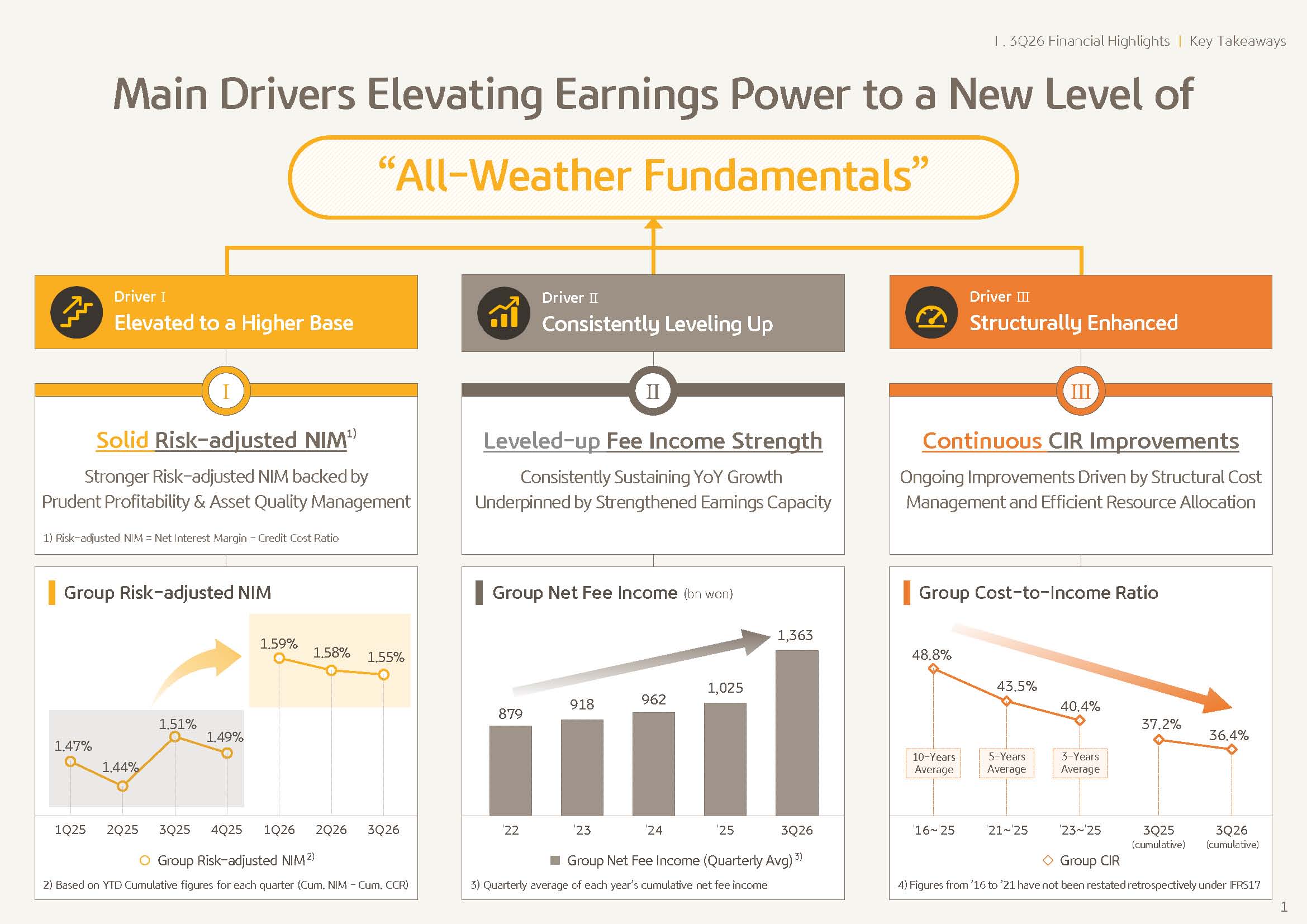
Let's go to page 1. KBFG is pursuing qualitative improvements in our earnings structure by managing actual returns from a risk-adjusted perspective that takes into account the credit loss ratio, moving beyond efforts solely focused on improving the net interest margin. Accordingly, the group's actual interest yield after accounting for credit risk has remained stable at a level one notch higher than the previous year.
In addition, in our fee income business, we are building a foundation for sustainable growth in fee income through flexible resource allocation that takes into account changing capital market conditions and broader market developments, as well as diversification of our revenue sources. In addition, the group CIR has been maintaining a downward stabilization trend. Along with our scale expansion, we're improving cost efficiencies and increasing our residual profit after costs.
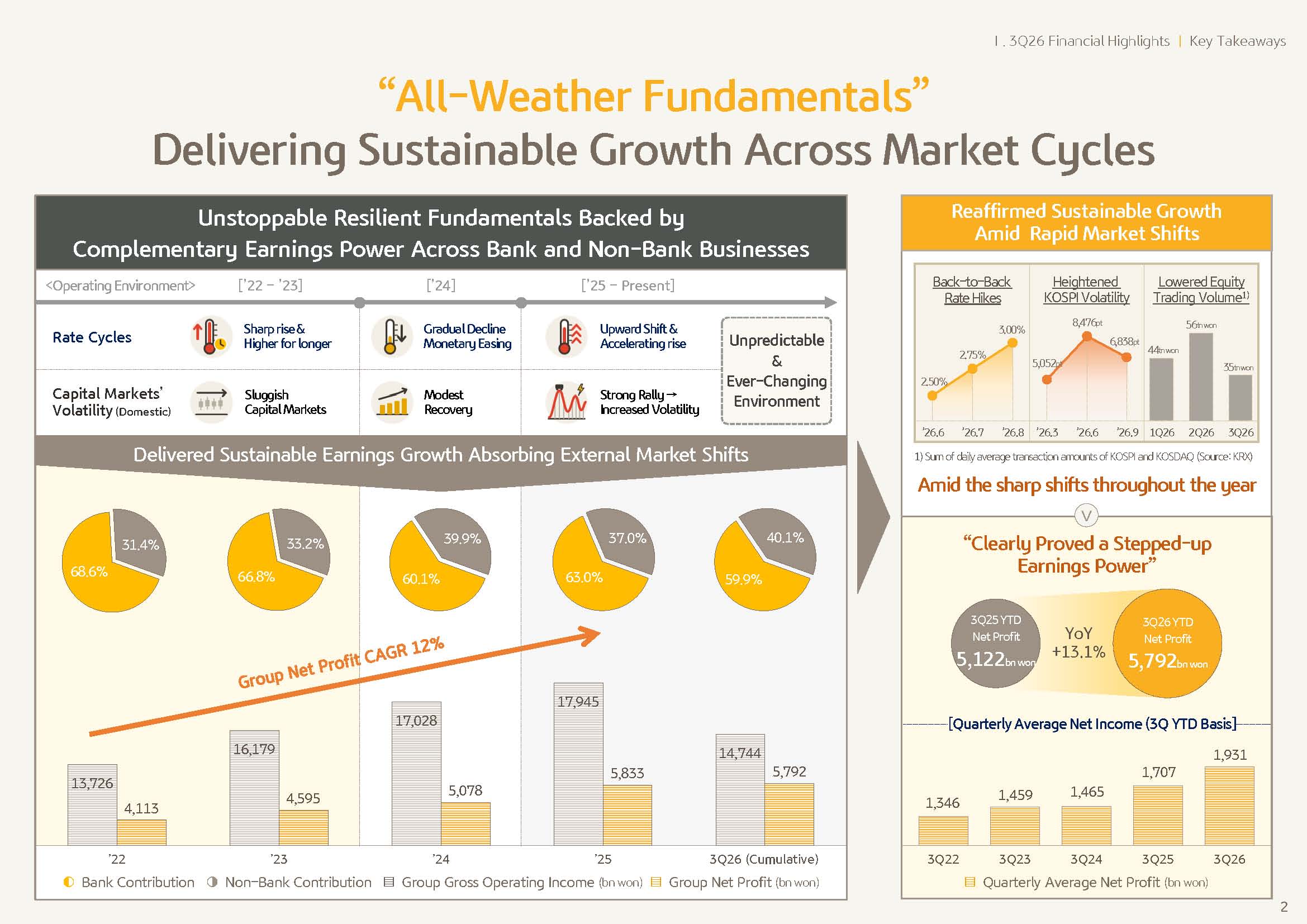
Overall, we are building a profit structure capable of fully absorbing volatility amidst extreme changes in the market environment. Please find on the next page that KBFG despite increasing volatility and an increasingly unpredictable macroeconomic environment has continued to deliver stable earnings growth supported by complementary earnings generation from our banking and non-banking businesses.
KB Financial Group plans to continuously expand our group's fundamentals by diversifying our revenue streams and by reinforcing solid management to secure sustainable future growth engines. Next, before covering our business performance, I would like to walk you through our Q3 cash dividends.
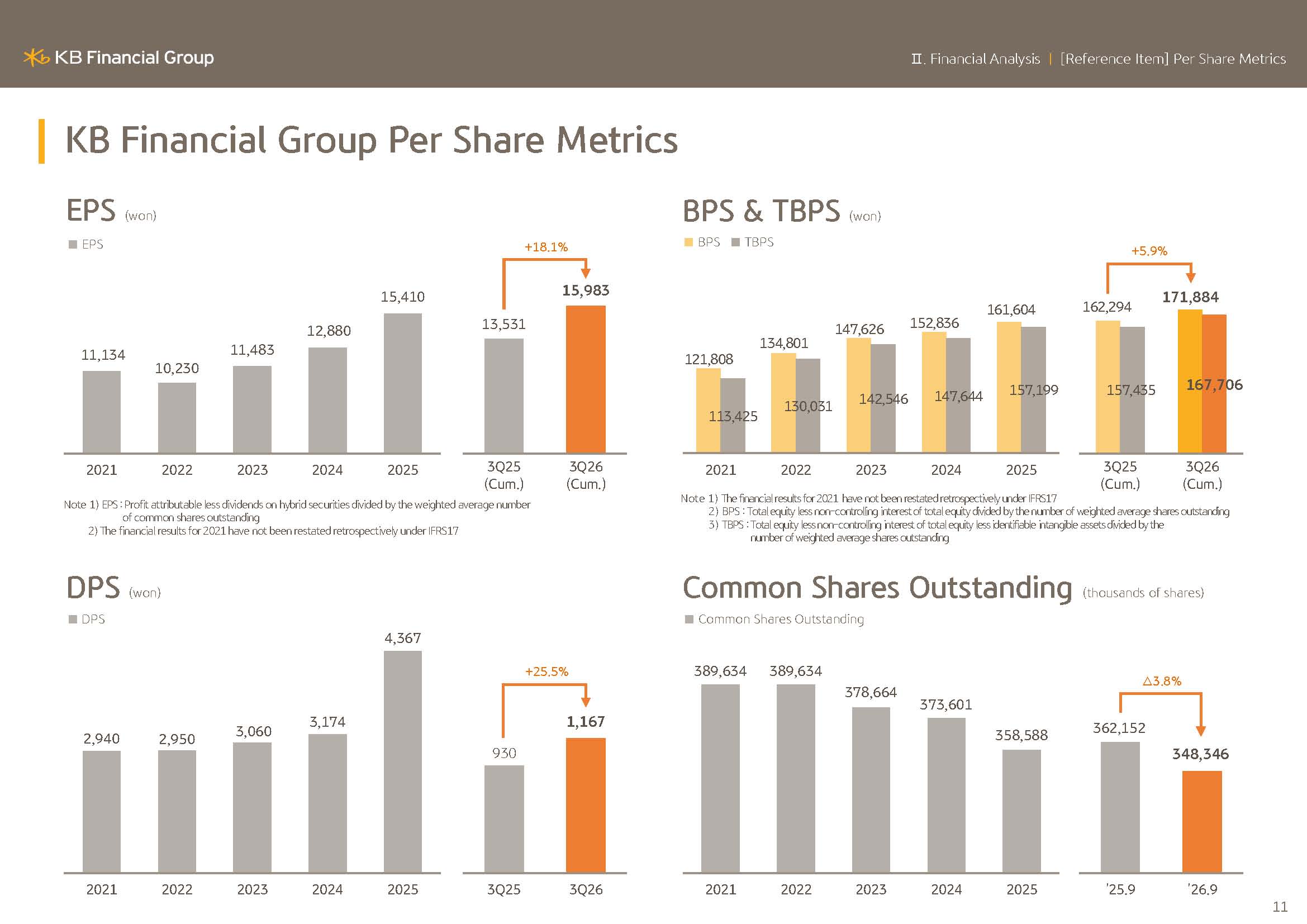
Today, our BOD approved a cash dividend of KRW1,167 per share, totaling KRW404.9 billion of cash dividends. Q3 cash dividend per share increased by KRW237 YoY, a 25.5% YoY increase reflecting a higher total annual dividend amount compared to the previous year and the impact of share buybacks.
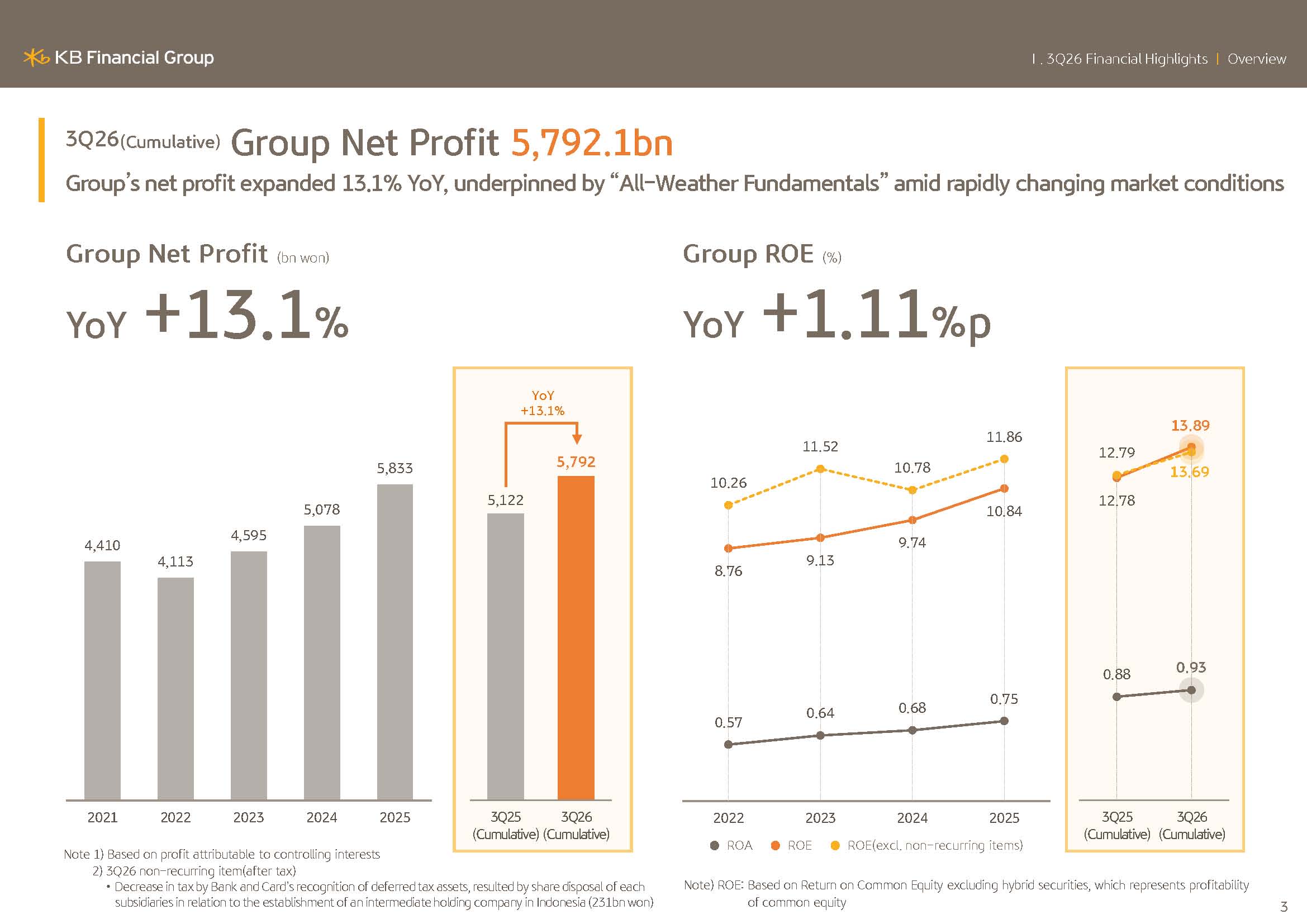
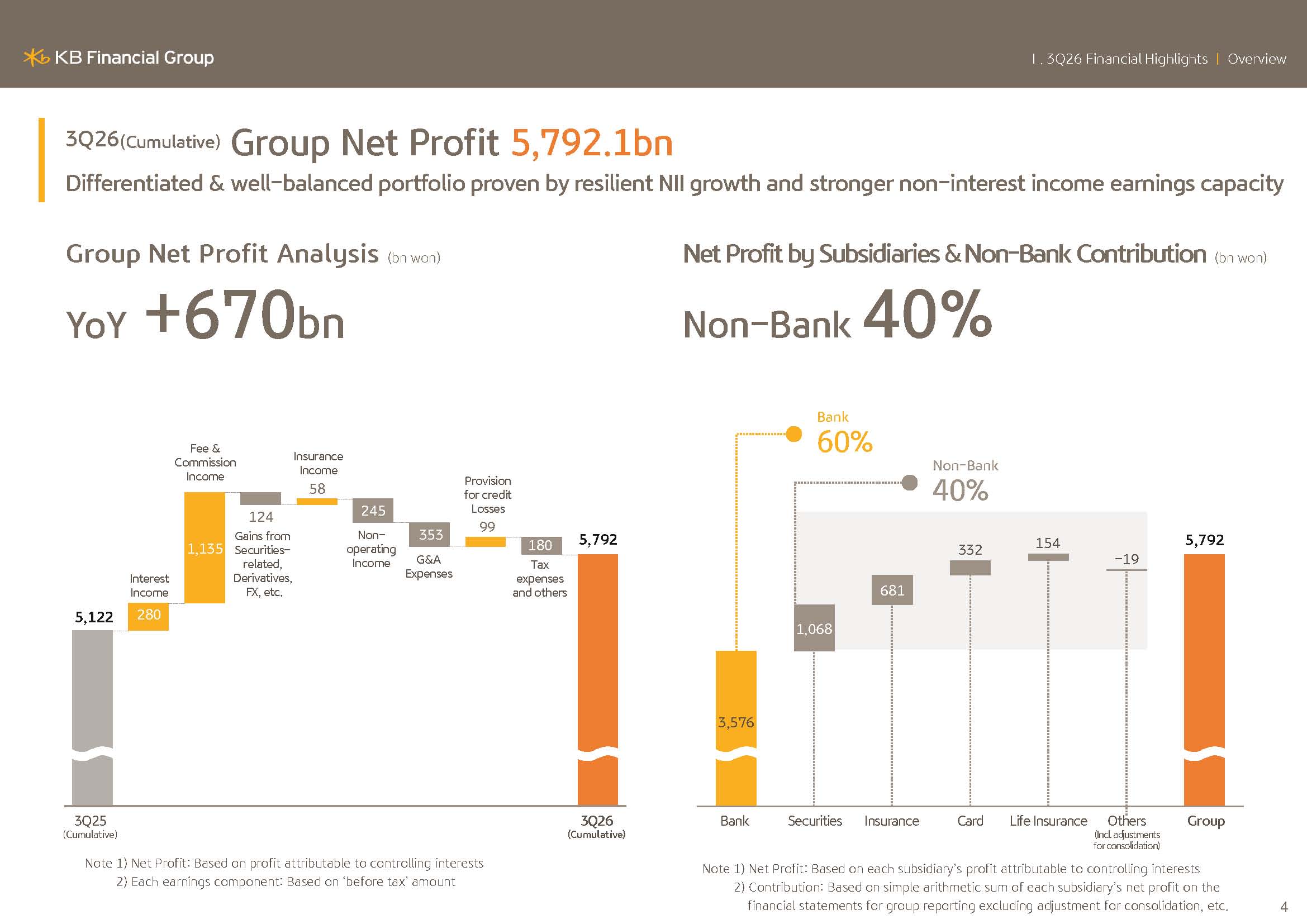
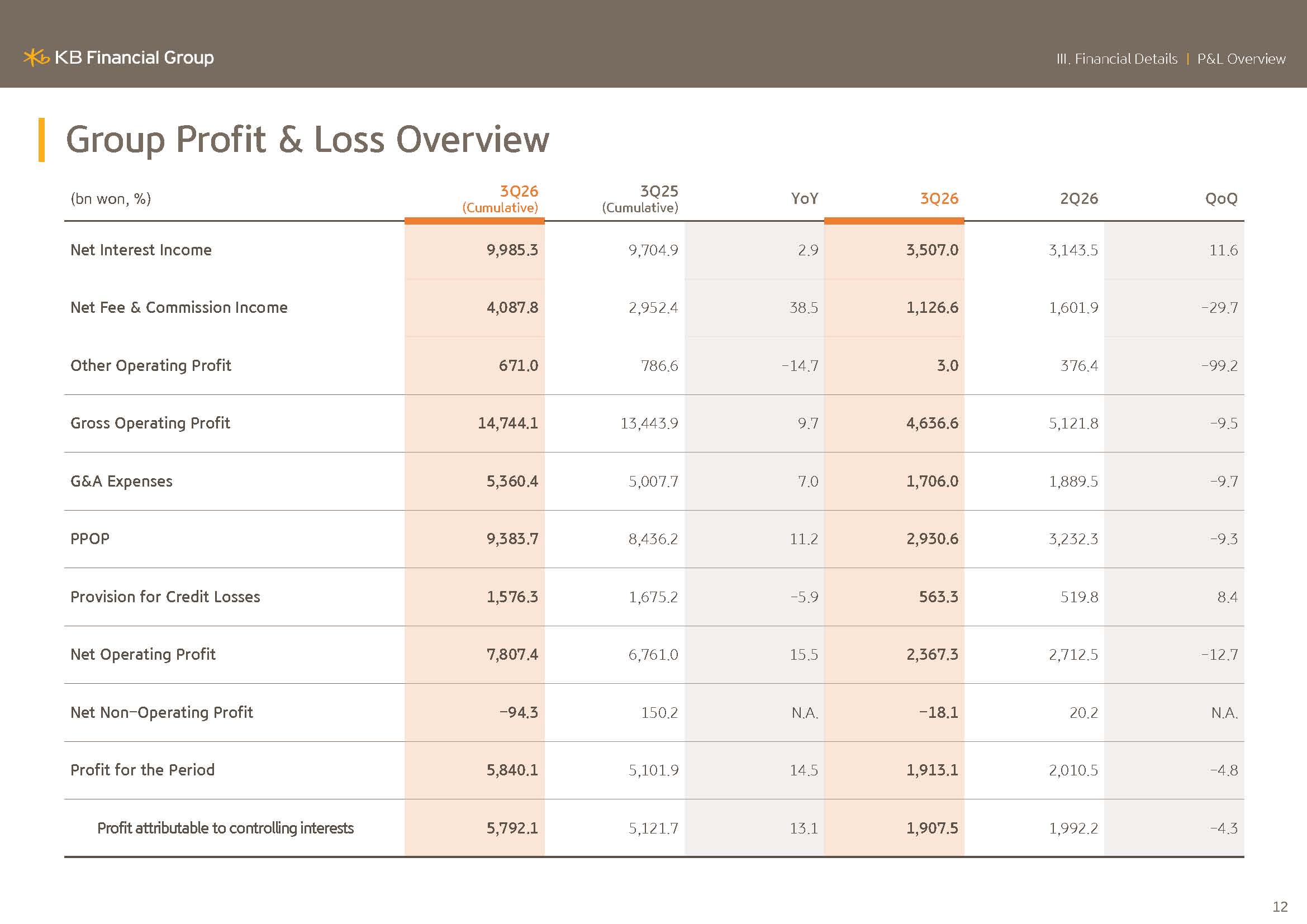
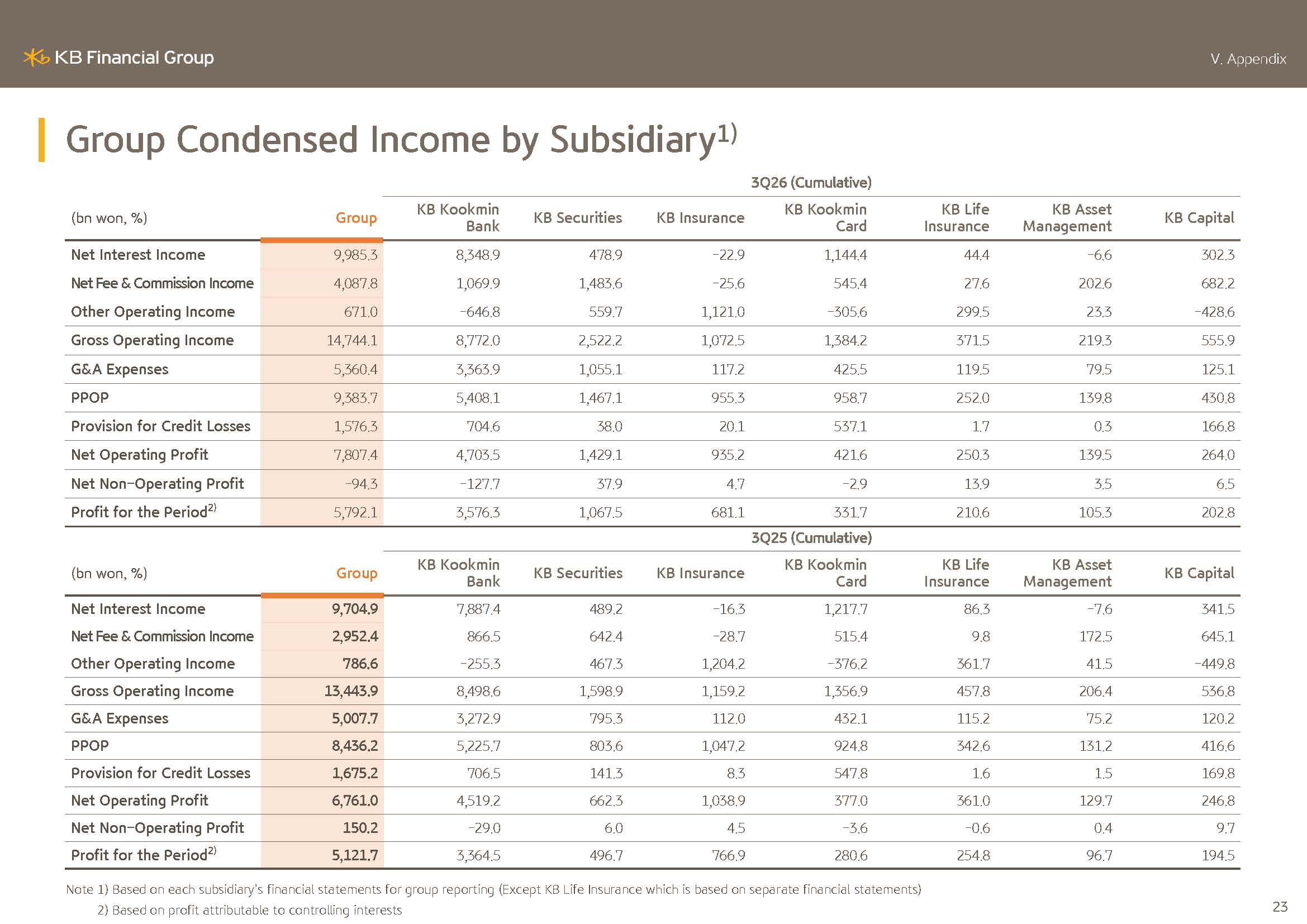
Next, I will cover KB Financial Group's business performance. KB Financial Group's Q3 net profit posted KRW1,907.5 billion, and on a Q3 cumulative basis, it posted KRW5,792.1 billion, a 13.1% YoY increase. Q3 cumulative group ROE posted 13.89%, marking a significant improvement of 1.1 percentage points YoY.
With factors such as the expansion of the stock market volatilities and the market rate increase leading to valuation gain volatilities after the first half in Q3, non-interest income showed a slight weakness, but based on solid loan growth, net interest income increased and rebound in QoQ and G&A and credit loss reserves are being stably managed and is continuing solid earnings generation capacities.
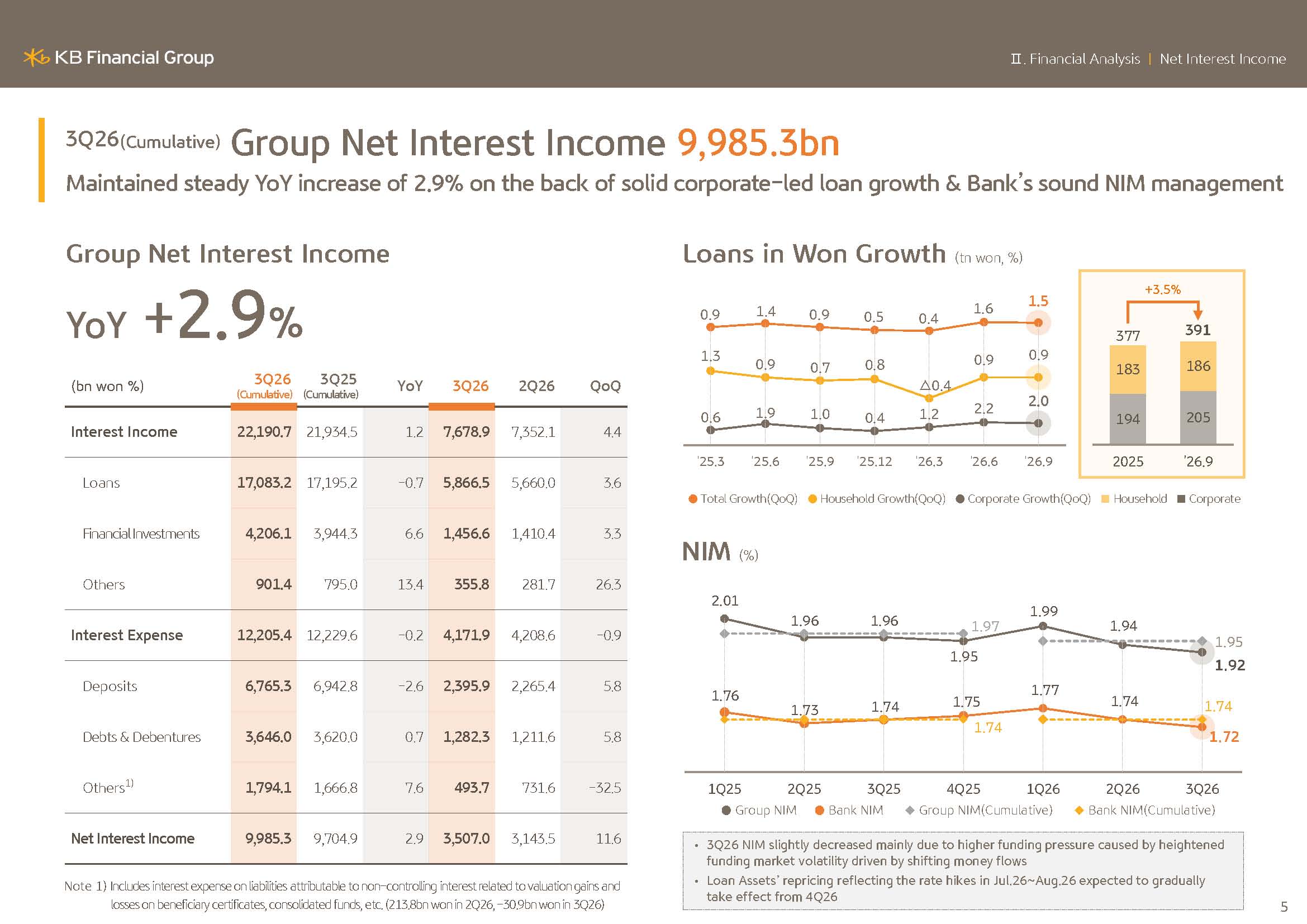
From now on, I will go into the details of our business performance in each category. 2026, Q3 group net interest income posted KRW3.507 billion. And with the increase of funding costs despite the weak NIM caused by factors including unbalanced funding market challenges, market supply challenges. It increased by 11.6% QoQ with corporate loan based solid bank loan growth and the -- as the base effect of interest expenses related to valuation gains on consolidated funds from the previous quarter dissipated, you can see that there was a result. In addition, on a Q3 cumulative basis, it grew to 0.9% YoY and posted KRW9,985.3 billion and it's continuing stable growth trend.
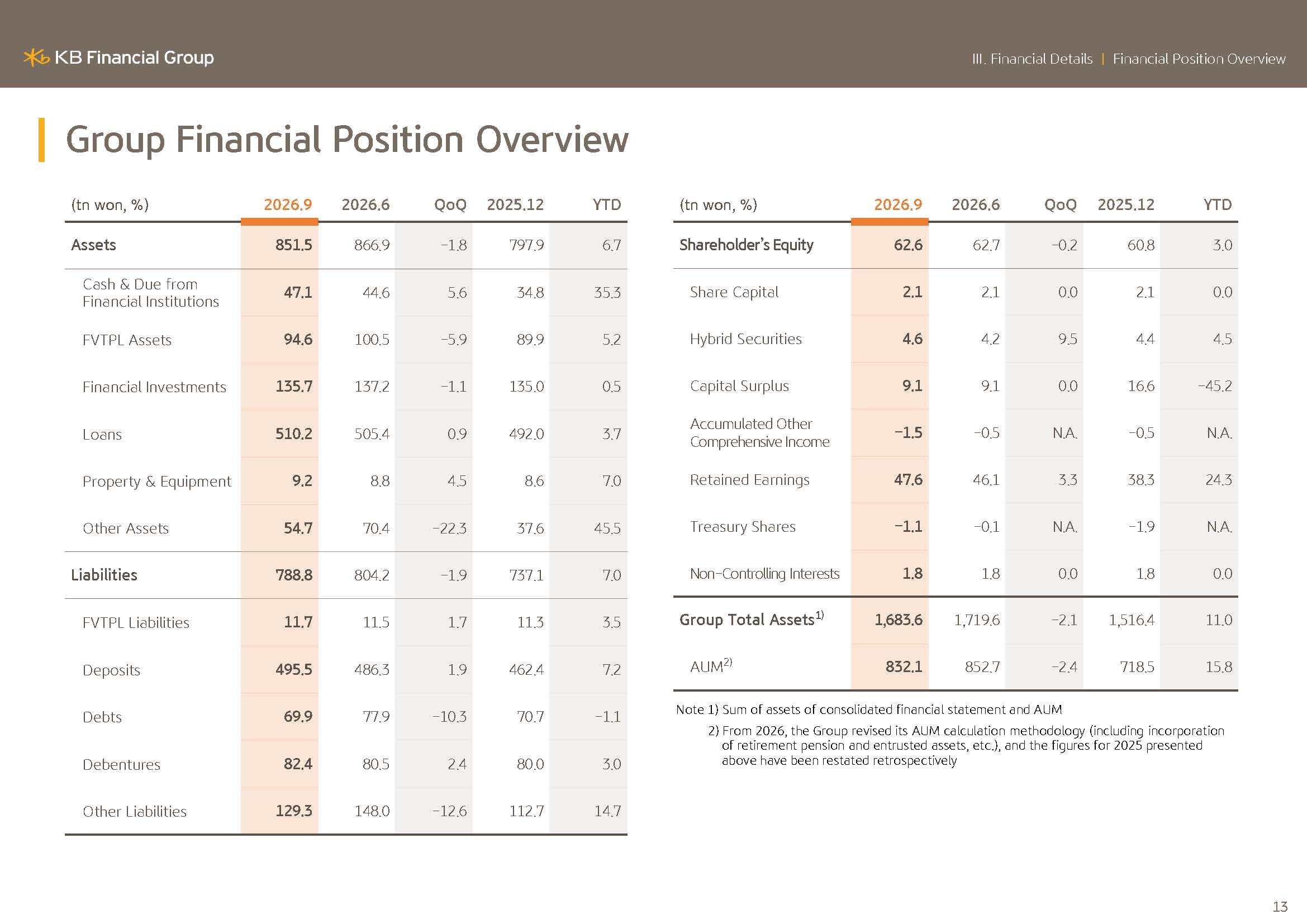
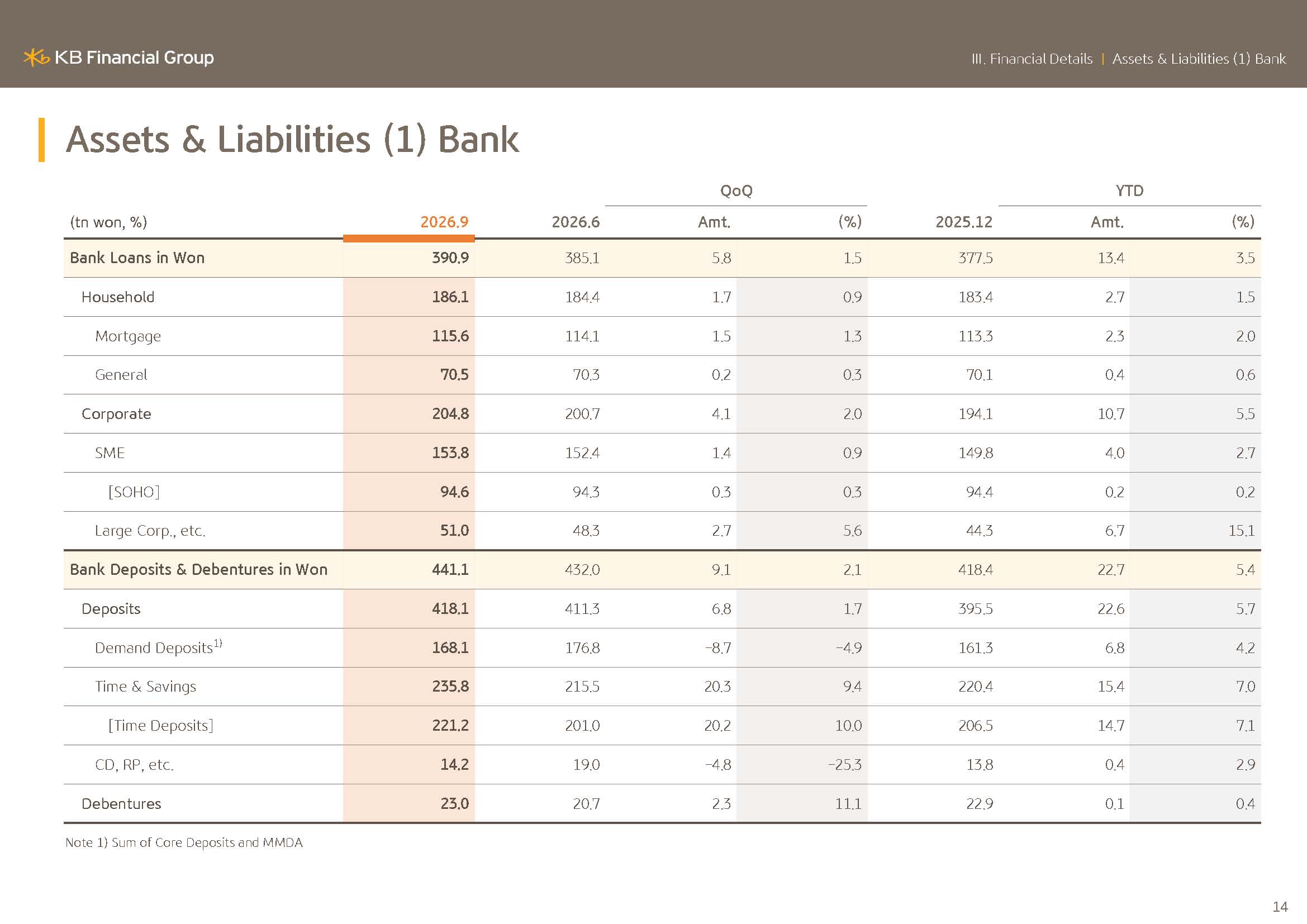
Next, I will cover bank loans in won growth. Bank loans in won based on September end 2026 posted KRW391 trillion and grew 3.5% YTD and 1.5% QoQ, respectively. For household loans, stable growth continued based on real demand and increased 1.5% YTD and 0.9% QoQ, respectively. Corporate loans centering on large corps and blue-chip SME loans increased 5.5% YTD and 2.0% QoQ, respectively. We plan to move forward without compromising our financial soundness and profitability taking into consideration the rebalancing of loan assets in light of overall household debt levels and portfolio transitions through productive finance.
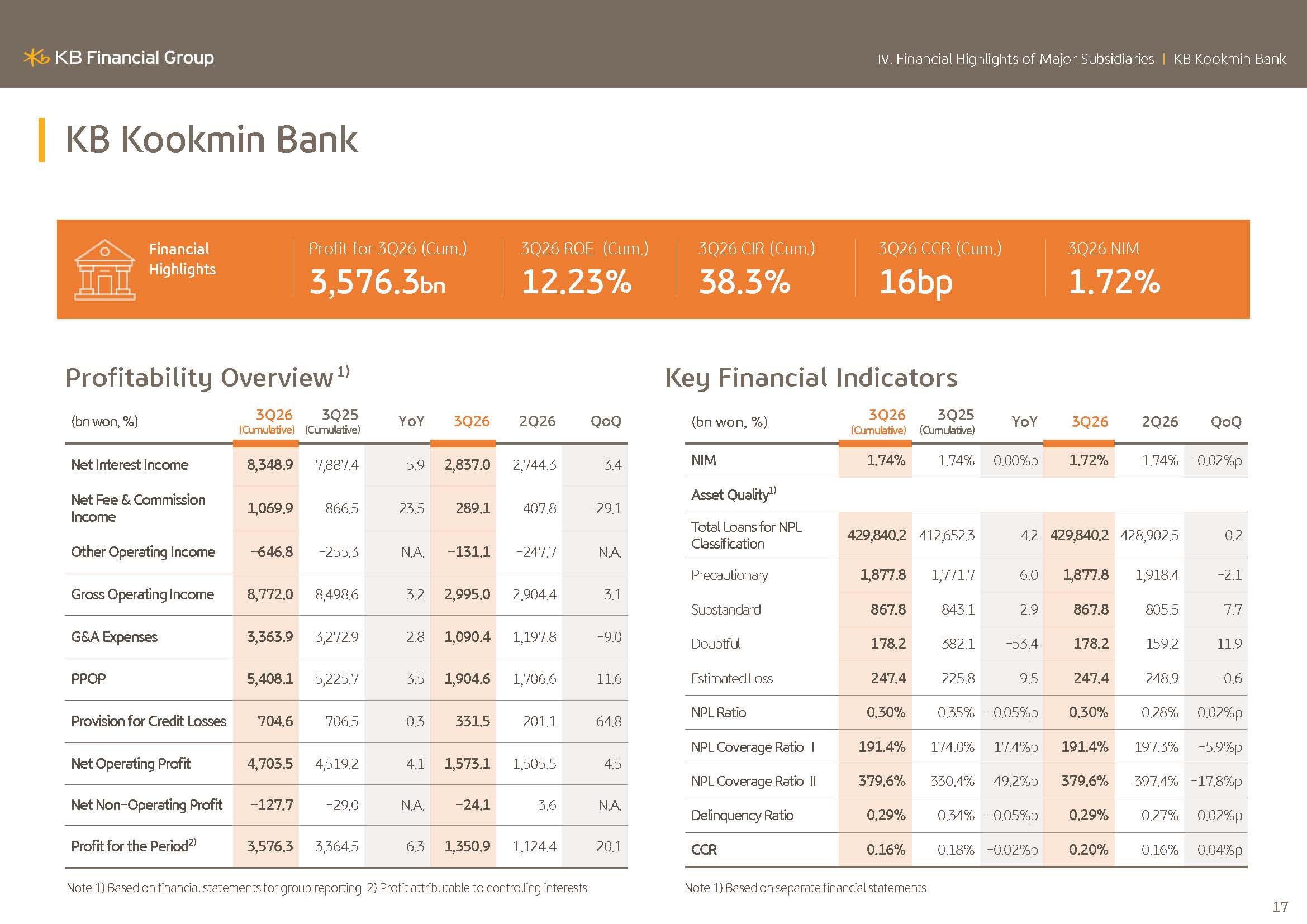
Moving on to the net interest margin on the bottom right. In Q3, the group's NIM recorded 1.92% and bank NIM, 1.72%, each contracting by 2 basis points QoQ. Although the bank's loan asset yield showed some improvement during the quarter. This contraction was due to an increased cost burden stemming from uneven supply and demand dynamics in the funding market alongside with irregular fund flows. However, from Q4, the base rate hike from July and August will be gradually reflected in the repricing of our loan assets. Therefore, we expect the improvement in asset yields to further expand.
And by leveraging the Group's greatest strength, our superior sales channel capabilities, we will focus on growing our low-cost deposits and by realigning our asset liability structure to effectively absorb volatility in the funding market we plan to manage our net interest margin even more stably.
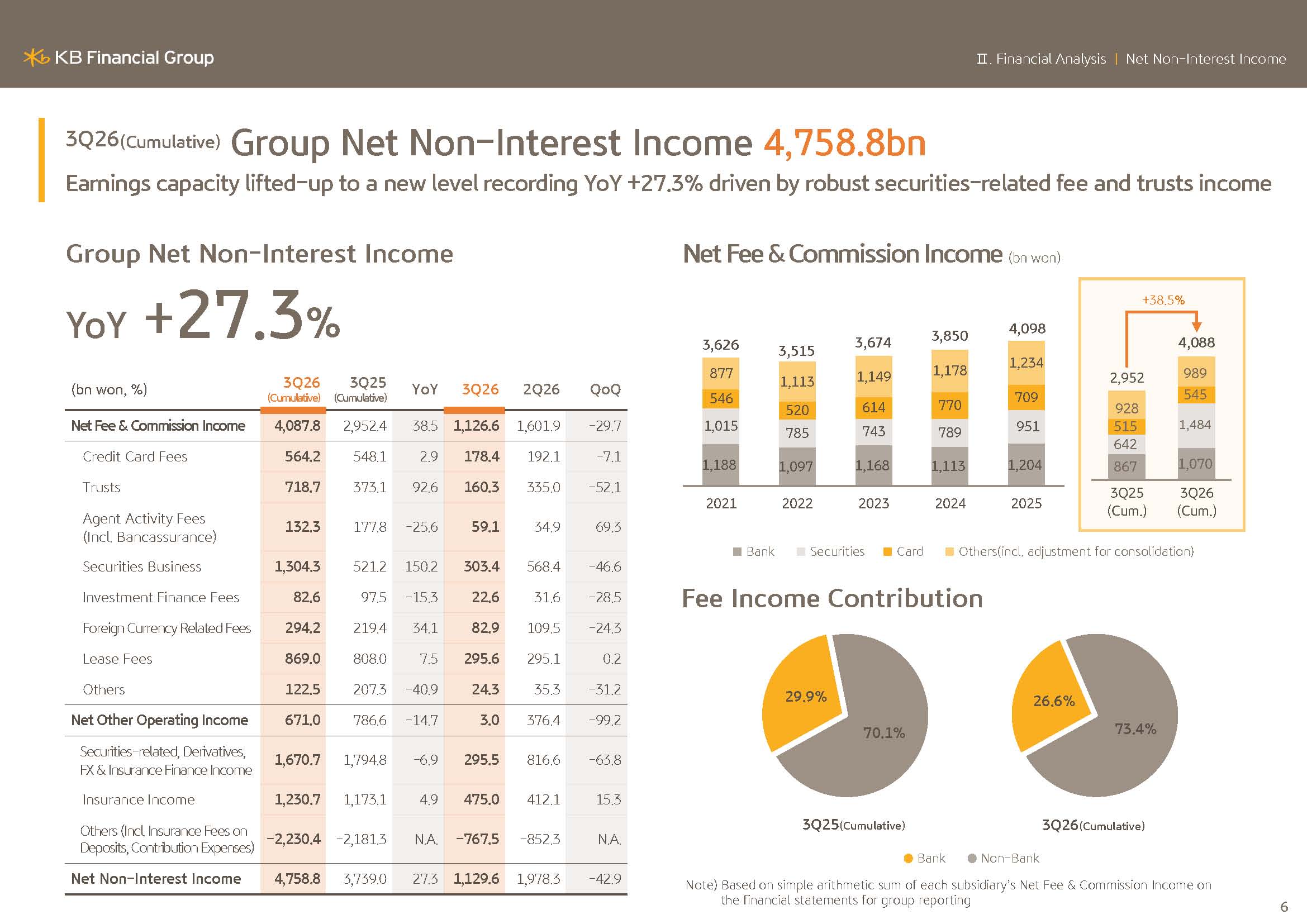
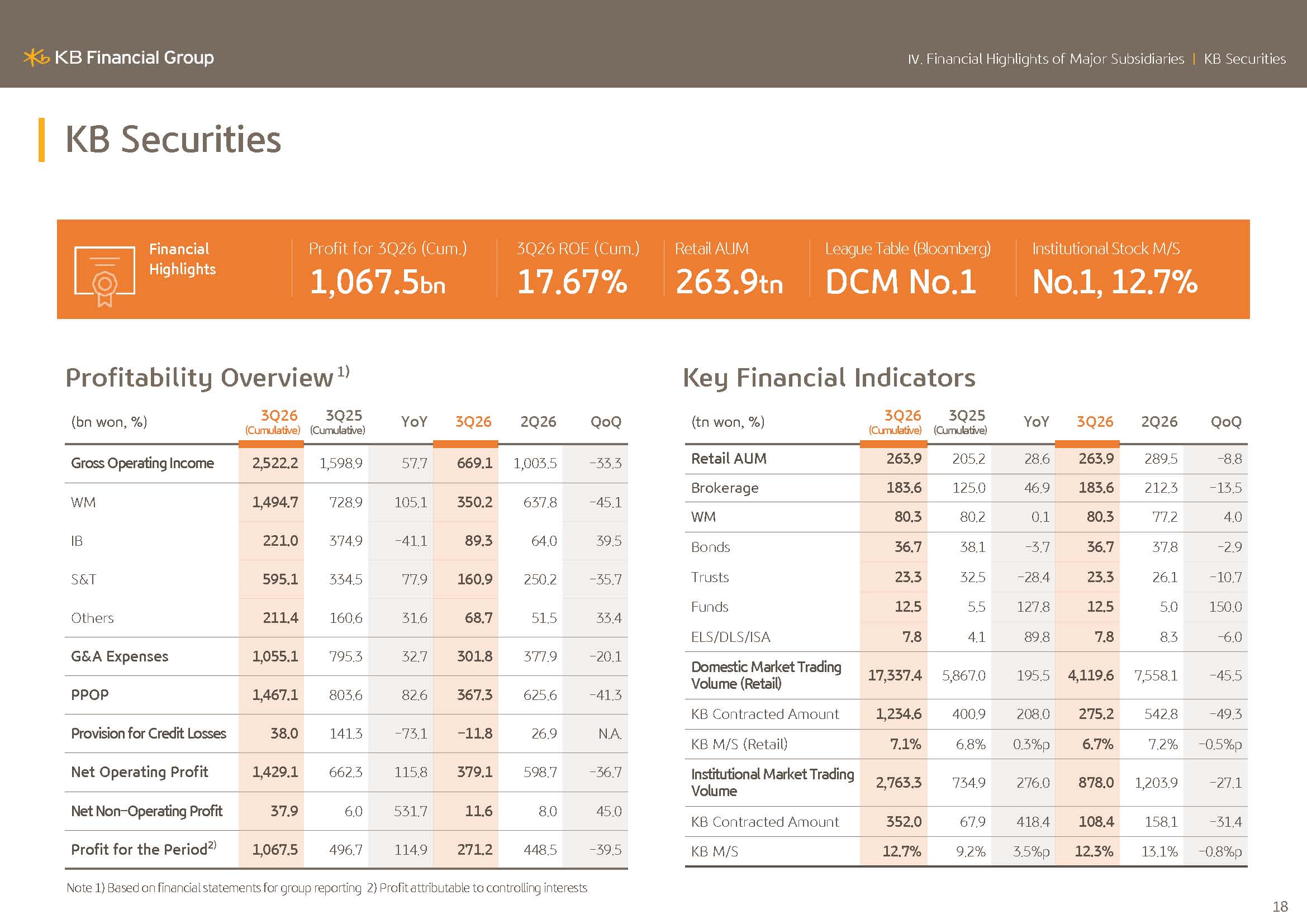
Next, I will move on to non-interest income. For Q3, the group's cumulative non-interest income stood at KRW4,758.8 billion, up 27.3% YoY. Of this, the cumulative net fee income recorded KRW4,087.8 billion, an increase of 38.5% YoY. The group's net fee income has exceeded KRW1 trillion for four consecutive quarters demonstrating a solid fee income base that has leveled up. However, due to a decrease in stock market trading, volume during Q3, the growth of the capital market-related fee income showed slowdown, resulting in a 29.7% decrease in net fee income QoQ.
And for the other operating income in Q3, impacted by rising market interest rates and heightened stock market volatility, performance was weaker in securities, derivatives, and FX, which resulted in a sizable decline Q-on-Q.
Although the non-interest income leveled up this year, quarterly volatility has expanded. Currently, we are making efforts to smooth out our earnings through replacement, trading of securities taking into account interest rate trends. Furthermore, we plan to secure earnings stability by strengthening our asset management capabilities in the capital markets and expanding the foundation of our flow business.
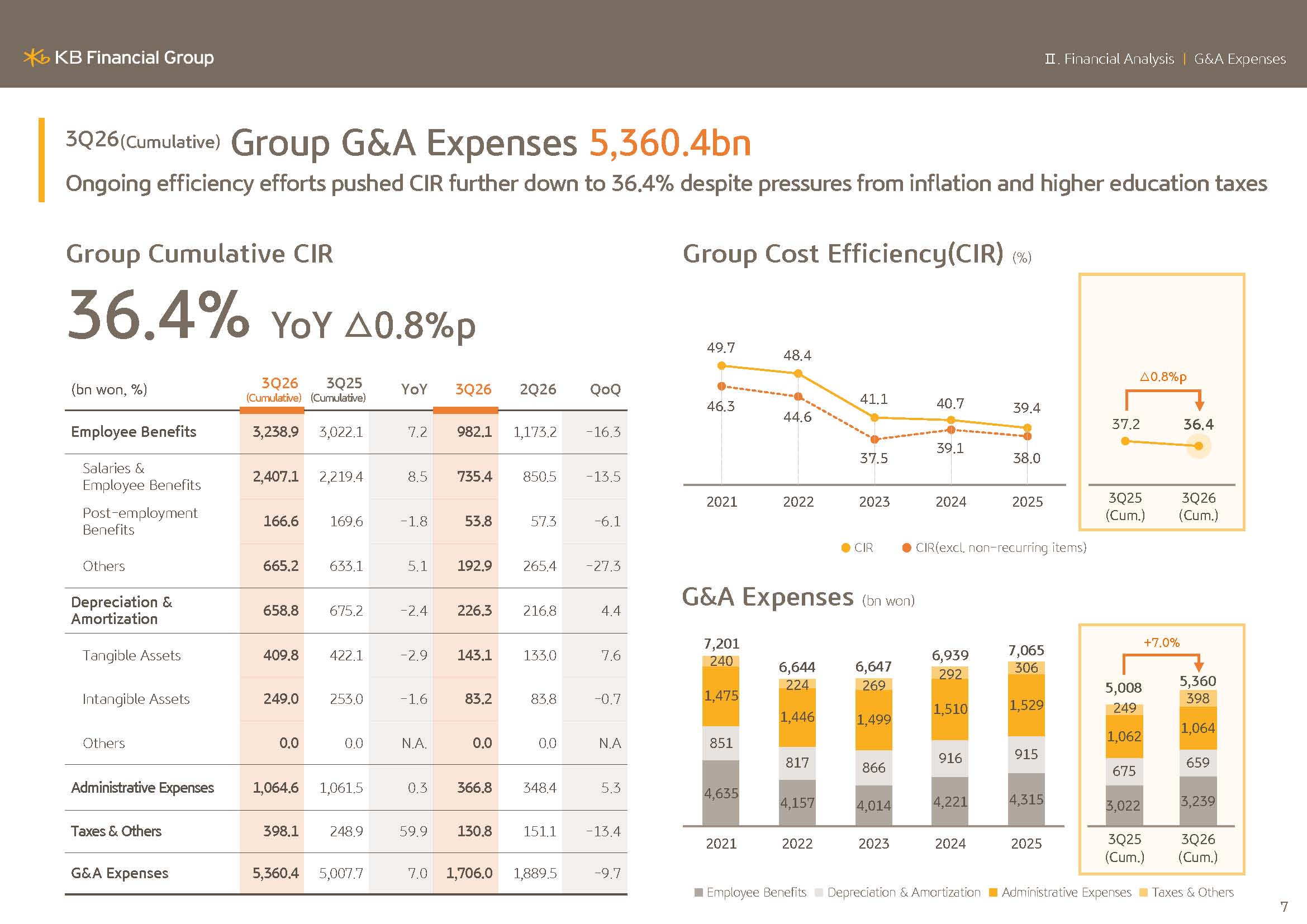
Next, I will cover G&A expenses. For Q3, cumulative G&A expenses stood at KRW5,360.4 billion, up 7.0% YoY. As for the group CIR, driven by continuous cost efficiency effort, it recorded 36.4%, maintaining a downward stabilization trend within our target range.
Moving forward, under the principle of selective cost execution, we will continue our efforts to reduce recurring expenses, and we plan to expand investments in future growth areas, such as AI.
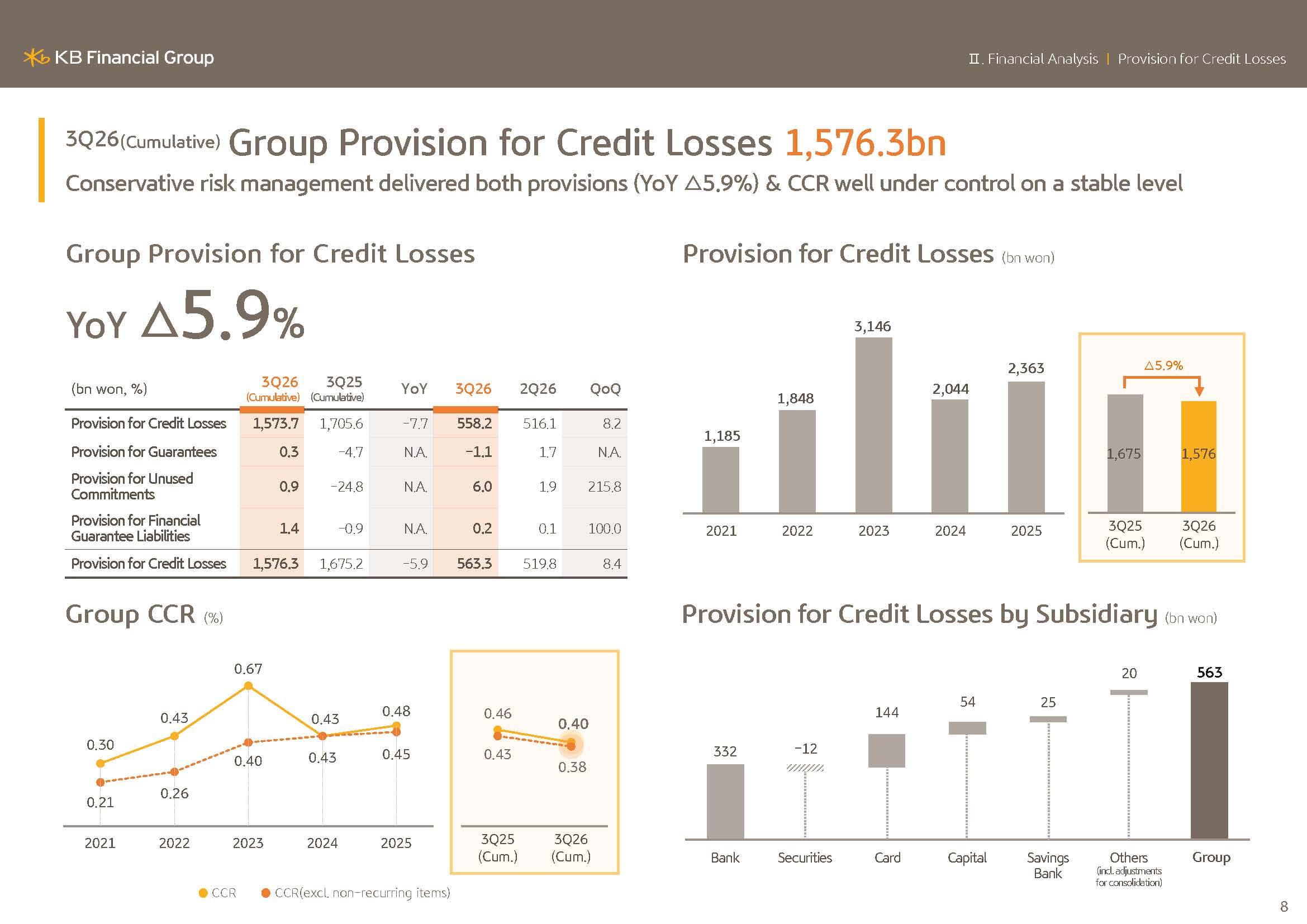
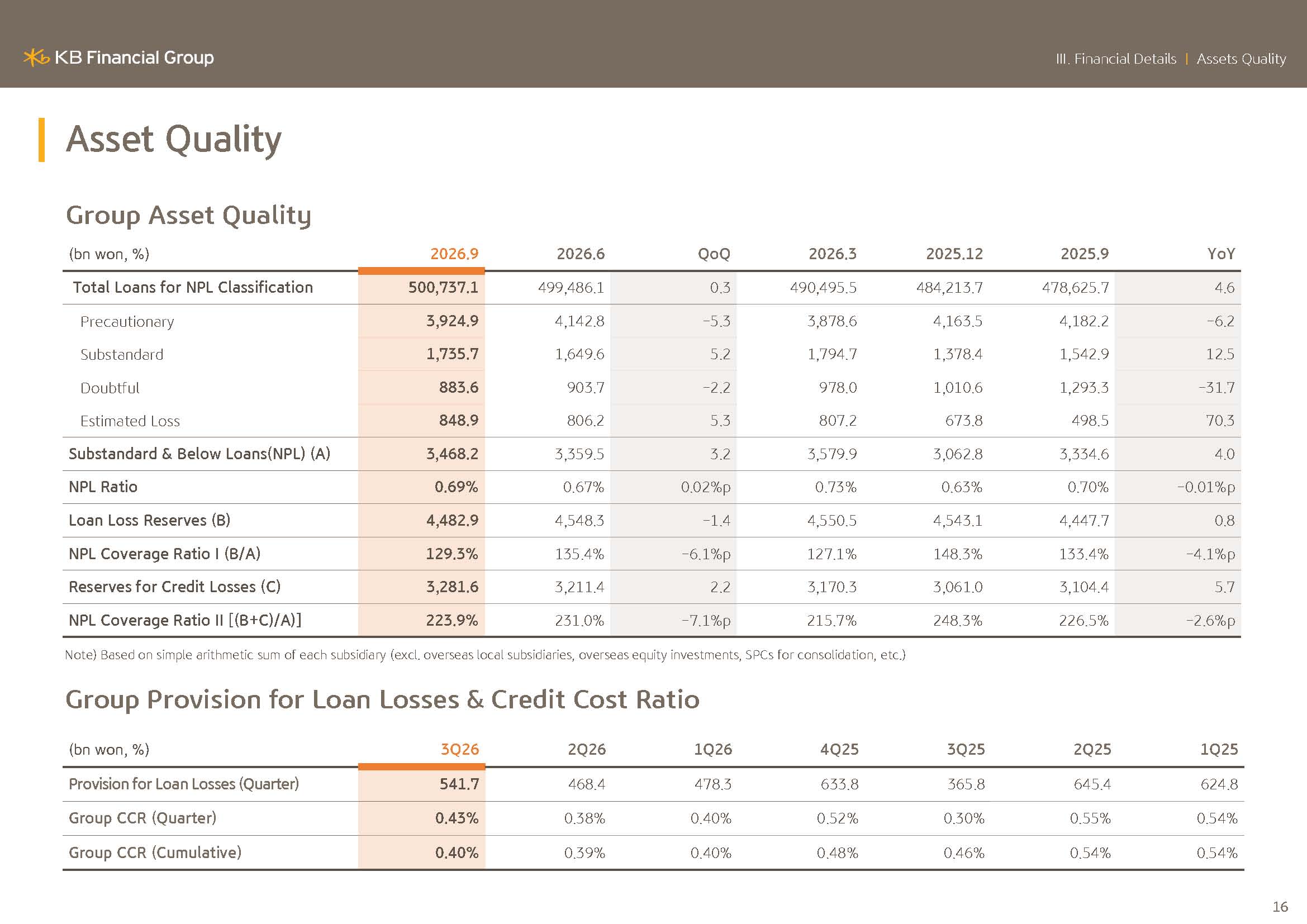
Turning to page 8, let me discuss the group's provision for credit losses. In Q3, the provision for credit losses was KRW563.3 billion, up slightly by 8.4% QoQ. This was driven by our conservative provisioning policy taking into account factors such as the base rate hikes. However, the credit cost for the group for Q3 recorded 43 basis points.
On a cumulative basis has also stood at 40 basis points, indicating that it's still being managed at a stable level. Considering this trend of improving asset quality, we project the Group's credit cost for the year to be managed within the mid-40 basis point range.
In light of the rising interest rate environment, we will strengthen our asset quality monitoring targeting segments vulnerable to credit risk by maintaining a conservative risk management stance, we plan to respond closely and proactively.
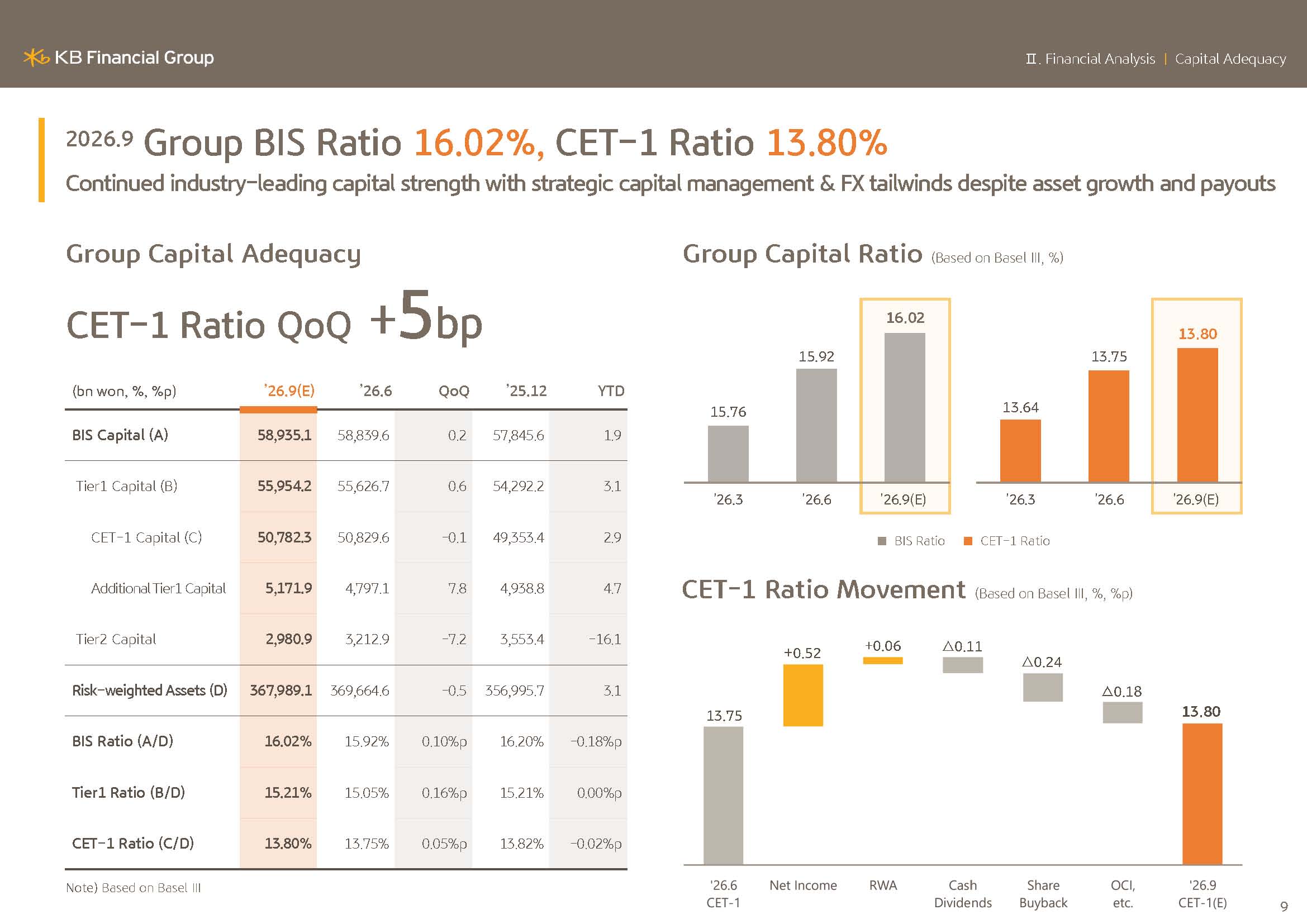
Next, I will elaborate on the group's capital ratios. Based on the preliminary figures as of end of September, the Group's BIS ratio recorded 16.02%, and CET1 ratio recorded 13.80%. The Korean won to US dollar exchange rate fell by approximately KRW181 from the end of the previous quarter, creating a more favorable environment compared to the first half of this year. But the upside to the CET1 ratio was somewhat limited, improved by 5 basis points Q-on-Q.
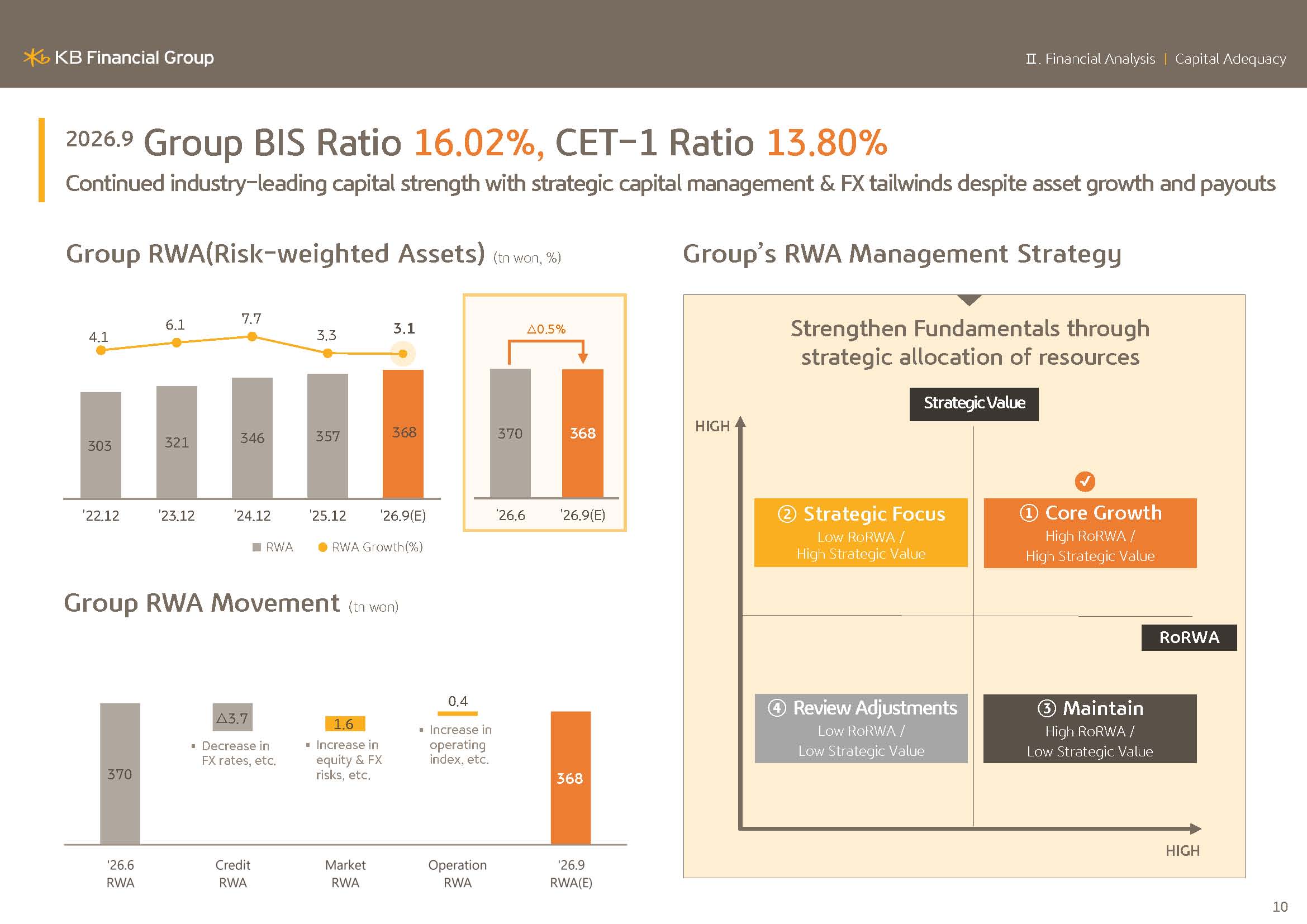
This is mainly attributable to approximately KRW1.3 trillion in share buybacks and cash dividends, our largest ever shareholder return and a decrease in FVOCI valuation gains, adding increased downward pressure. As for the group's first round of shareholder returns of 2027 will be determined based on the year-end CET1 ratio, we plan to minimize earnings volatility and focus on a more sophisticated RWA management to stably manage the CET1.
As of end of September 2026, the group's RWA recorded KRW368 trillion, up 3.1% YTD, showing our annual RWA growth rate is stably managed within our target range. The following pages contain details on the earnings that we have covered so far, so please refer to them.
This concludes the presentation on KB Financial Group's business results for Q3 2026. Thank you very much for your attention.